What’s the first thing that comes to your mind when you think of Japan? Let me guess: is it a mouth-watering dish of Sushi, a colourful anime, or an action-packed manga? What about the United States? Do you also imagine Hollywood Blockbusters, catchy Pop songs, and Marvel superheroes? Now, what pops into your head when you hear about South Korea? Chances are you immediately picture trendy K-Pop tunes, sparkling K-dramas, and alluring K-beauty products. If that’s the case, then you are not alone. These things are not just fun entertainment exports: they are reflections of each country’s soft power.
In 1985, The Oxford English Dictionary first defined the expression “Soft Power” as “the power (of a nation, alliance, etc.) deriving from economic and cultural influence, rather than coercion or military strength.” In the late 80s, the political scientist Joseph Nye popularized the concept of “soft power”, as opposed to “hard power”. For Nye, a country’s soft power rests on three resources: “its culture, its political values and its foreign policies.” Today, one of the most effective vehicles of soft power is Pop Culture.
According to the Cambridge dictionary, Popular Culture (commonly referred to as “Pop Culture” or “mass culture”) encompasses “music, TV, cinema, books, etc. that are popular and enjoyed by ordinary people, rather than by experts or very educated people.” In recent decades, Pop Culture has become a powerful weapon in international relations. It’s no longer just a byproduct of a country’s identity. No, it’s now a strategic weapon used to influence the world! Through Pop Culture, nations can boost their global image, attract tourism, promote language learning, sway political opinions, and even climb the ranks of the global hierarchy!
But how exactly did Pop Culture become such a powerful tool of soft power? Let’s dive in and find out together!
The Cold War: The Dawn of Pop Culture as a Geopolitical Tool.
After the end of the Second World War, the world shifted into an arena on which the USA and the USSR duelled incessantly for domination. The two rivals crafted different strategies to lure the masses into adhering to their ideology.
On one side, the Soviets launched a broad campaign to persuade the world of the communist system’s desirability. To this end, they employed an exceptionally large public diplomacy program. It involved promoting their high culture, news broadcasting, and sponsoring youth organizations. However, despite all these measures, the USSR lacked a very crucial resource which the US possessed: Pop Culture. The United States took advantage of this and became the first country to weaponize its Pop Culture and use it as a way to vanquish its opponents and conquer hearts and minds.
Indeed, in order to sabotage the Communist regimes from within, American cultural works infused with pro-US propaganda were suffused en masse into Eastern European countries’ black markets. Music, art, literature and Hollywood motion pictures spread an idealized imagery of a free and abundant America. These repetitive subconscious images fanned the flames of dissent among the Eastern European audience of deprived people who longed for the same liberties and wealth portrayed in American media. Thus, a stubborn marketing of “the American dream” was deployed to destabilize the communist regimes.
American comic books and cartoons also played a pivotal role in the conflict, disseminating anti-communist messages around the world. For example, Captain America, created during WW2, made a comeback in the 50s, fighting the communists under titles like “Captain America: Commie Smasher!” Disney and other American studios also enlisted in Cold War Propaganda. In 1957, Disney created educational films for the U.S government. One of them, titled “Our friend the atom”, presented nuclear energy as a force for peace and progress. So, next time someone tells you that “Disney is too political now,” feel free to share the hard truth with them : art has always been, and will always be political. This is why it is intensely monitored by many states around the world.
Speaking of state control: in response to the American soft power strategy, the Soviet Union started to severely limit the diffusion of Western cultural works. As a result, American culture came to symbolize modernity, freedom and resistance.
1980-2000: The Expansion of American Pop Culture in a Hegemonic World.
November 9, 1989 : the Berlin Wall collapsed. The Cold War was abruptly brought to a halt. The world transformed from a bipolar order, where two superpowers vied for global dominance, to a unipolar system commanded by one single hegemon: the United States of America.
From the 1980s through the 2000s, the U.S. strengthened its global dominance even more. But this time, there was no serious rival in sight. At that time, the world witnessed a gargantuan expansion of mass media, first through television and radio, and later through the internet. This media boom catalysed the expansion of American culture worldwide. Hollywood’s preeminence in cinema, coupled with the surge of blockbuster films and sagas, enthroned the United States as the dominant cultural power worldwide.
Several American entertainment titans used American Pop Culture to raid the world. For instance, The Walt Disney Company exported American values through movies, TV shows, merchandise, and theme parks. Other entertainment companies such as Paramount Pictures, Warner Bros, and Universal Pictures produced blockbusters that globalized the American lifestyle and way of thinking.
Television networks such as CNN, NBC and FOX actively promoted American interpretations of global events. They also broadcasted numerous TV shows, which were widely exported, dubbed, and syndicated internationally. These series often aired in post-Soviet countries, as well as Latin America, Asia and Europe, bombarding telespectators with American ideals. Among these shows, we find The Simpsons (1989–present), Friends (1994–2004) and The fresh Prince of Bel-Air (1990–1996). At the same time, the rise of MTV fuelled the popularity of American artists around the globe.
However, despite the USA’s seemingly unrivalled autocracy, the world could not remain unipolar forever. In the beginning of the 21st century, the rise of regional powers began to sway the established balance as countries like South Korea, China, and India molded their own Popular Cultures into powerful weapons, challenging the previously undisputed supremacy of the United States
21st Century: Diversification of Influences in a Multipolar World
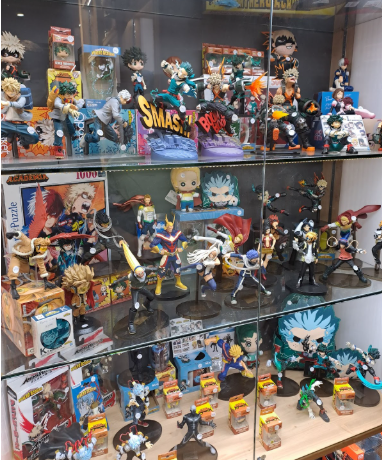
In the early 2000s, Japan’s soft power began to make waves on the global stage. From manga and anime to cutting-edge technology and video games, Japanese Pop Culture left no one indifferent. To capitalize on this cultural tsunami, the Japanese government launched the “Cool Japan” strategy, an initiative to promote Japanese culture abroad, boost cultural exports and attract tourists. The results speak for themselves: in 2023, the U.S. News & World Report ranked Japan’s cultural influence as the highest in Asia and fifth worldwide.
South Korea is another example of a country that has successfully leveraged its Pop Culture to amplify its soft power. As South Korea’s ex-president Park Geun-Hye famously said : “In the 21st century, culture is power.” This phrase accurately illustrates the South Korean government’s ongoing strategy when it comes to Pop Culture. In fact, they have been actively promoting their Pop Culture, flooding the world with K-Pop, K-Dramas, K-beauty products and even Korean cuisine. This has given birth to the “Hallyu« , also called the « Korean Wave », which refers to the rapid surge of South Korean culture since the late 1990s.
That said, the use of Pop Culture as an arm of soft power is not exclusive to the United States, Japan and South Korea. Many other nations have harnessed their cultural industries to expand their influence. For example, China’s fast-growing film industry, state-supported series and the global success of social media platforms like TikTok have allowed the country to distinguish itself in the global cultural arena, even though it still faces challenges due to western hostility.
In the meantime, Bollywood has been actively disseminating Indian films worldwide. Movies like 3 Idiots, Dangal, and RRR have found massive international audiences, bolstering India’s influence.
Turkey has also emerged as a major cultural player through its immensely popular TV dramas, such as Ertuğrul, Magnificent Century, Fatmagül and Kara Sevda. Turkish shows are revered in many areas in the world, like Latin America, Eastern Europe, the Middle East, and Central Asia. These beautifully crafted productions are subtly exporting Turkish culture and language, and reshaping the country’s image abroad.
Finally, Egypt, once the uncontested cinematic capital of the Arab world, continues to wield soft power through its monumental film and television productions. Classic Egyptian cinema, starring pharaonic Egyptian stars like Faten Hamama, Omar Sharif or Salah Zulfikar, as well as more recent hits, remain influential across the Arab-speaking world, reinforcing Egypt’s radiance in the region.
As for the United States, its dominance through Pop Culture is still uncontested. Nonetheless, it is now facing many setbacks, like the rising dissent towards American cultural imperialism. In fact, the expansion of American cultural products has faced resistance in several areas in the world, as nationalism grows bolder and people become more cautious towards the USA’s political agenda.
All of this raises the following question: where might the next major wave of influential Pop Culture come from? Don’t hesitate to comment to share your predictions with us!
Aya.B
