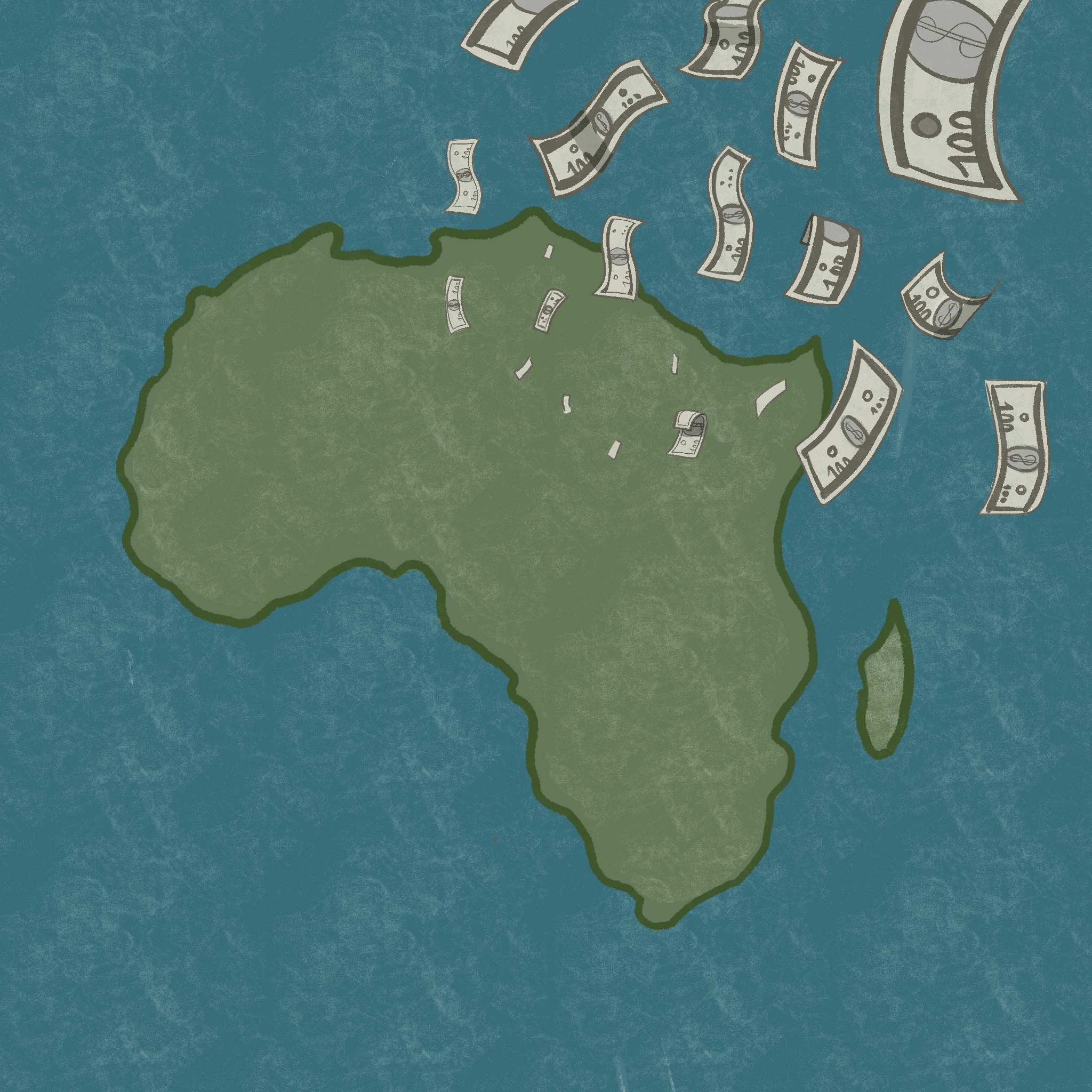
“We live in a culture of aid,” writes Zambian economist Dambisa Moyo in Dead Aid, a thought-provoking critique of foreign assistance in Africa. And really, anyone living in the developed world can attest that we are constantly reminded it is the moral duty of the better-off to help the less privileged. From postbox flyers to television adverts, the same message echoes: more money needs to be sent to Africa. Therefore, aid has become an essential part of western culture. According to ISS Africa, “From 2000 to 2023, Africa received a cumulative amount of US$1.3 trillion in aid.” World Bank data reveals that in 2021 only, sub-Saharan Africa secured 62.29 billion dollars in development assistance. It is unquestionable that solidarity is necessary between humans. But are these transfers really helping? What if this aid were not only ineffective, but also worsened the situation? This is the question Dambisa Moyo explores in her book Dead Aid. This article analyses her arguments and asks: is aid truly causing more harm than good?
What is aid?
According to the Cambridge Dictionary, aid refers to “help, in the form of food, money, medical supplies, or weapons, that is given by a richer country to a poorer country.” Aid can be divided into three categories: humanitarian aid, offered as a remedy to catastrophes, charity-based aid, issued by charitable organizations, and finally, systemic aid. Systemic aid refers to the payments made to the governments of developing countries by developed countries (bilateral aid), or transfers made through international institutions, such as the World Bank (multilateral aid). Systemic aid can take the form of grants (large sums accorded for nothing in return) or, more frequently, concessional loans (money lent to developing countries below market interest rates, and sometimes, for longer periods than ordinary markets). Dead Aid focuses solely on systemic aid, not emergency or charity-based aid. Therefore, throughout this article, the term “aid” will be used to refer to systemic aid only.
“Seduced by the siren call of aid, African governments sink their ships on the rocks of development demise.” -Dambisa Moyo.
The death of aid.
Throughout Dead Aid, Dambisa Moyo sketches a glum image of systemic aid’s consequences on developing economies. Leaning on the micro-macro paradox, she argues that, even though one might be impressed by aid’s short-term payoffs, the prospects are not as bright in the long run. This idea is illustrated by a simple tableau: an African mosquito net maker employs ten people, each of whom have fifteen relatives to provide for. The team weaves fifteen nets per week, which is hardly enough to combat the malaria-disseminating insect. Suddenly, a well-meaning western government pours a hundred thousand mosquito nets into the afflicted area. Although this solves the issue of mosquito net deficiency, it also leaves the net makers unemployed. Thus, they can no longer feed their 150 dependents. This is where the paradox lies: short-term success (here, acquiring enough nets to fight the mosquitoes), can often erode chances of long-term development. According to Moyo, these negative long-term consequences manifest through multiple mechanisms:
The first mechanism is what the author calls the “vicious cycle of aid.” When corrupt governments have easy access to external cash, they no longer need to collect taxes to function, which breaks the bond between rulers and citizens. As a result, the checks and balances which sustain all well-functioning democracies disappear because leaders do not fear losing votes if they disappoint the people. This environment encourages rent-seeking behavior (the pursuit of private wealth by manipulating policy rather than through productive activity) and enables elites to weaken the rule of law for their own personal gain. Consequently, domestic institutions are diluted, and the country becomes less appealing for investment, while much aid money remains idle instead of being channeled into productive initiatives.
Moreover, since aid money reaches only a privileged few, it is often spent on consumer goods rather than being saved, which reduces banks’ reserves for lending and impedes domestic investment. In addition to this, higher consumption leads to inflation. In response to the price rise, policymakers tend to increase interest rates, which further weakens investment, while increasing poverty, and causing the demand for aid to grow. This plunges the country into a deep dependency to aid.
This vicious cycle has been suggested by numerous studies, such as “Foreign aid, institutional quality, and growth” (Young, Sheehan), published in 2015, which demonstrates, using a panel of 166 countries on the 1970-2020 period, that “aid flows are associated with a deterioration of both political and economic institutions,” especially the “legal system and property rights as well as its openness to international trade.”
Dambisa Moyo adds that aid flows can also be an indirect cause of civil war, as the temptation for insurrection grows bolder when the government’s funds are consequent, and corruption rampant. She further argues that aid can strangle the export sector, a phenomenon known in economics as the Dutch Disease. The Dutch Disease shows that any substantial inflow of foreign currency, whether from aid, natural resource exports or investment, can make the local currency stronger. A stronger currency means that the country’s exports will become more expensive for other countries, so the exports industries shrink. And since manufacturing exports are crucial for poor countries to develop, this can slow their long-term growth.
Alternatives to aid.
To repair the damage caused by large intergovernmental aid transfers, Dambisa Moyo encourages a “gradual reduction in systemic aid over a five to ten-year period.” For her, in the long term, only one scenario is advisable: “an aid-free world.” Moyo recommends three main alternatives to aid, all relying on private capital flows rather than government-to-government transfers:
“The Capital Solution”: One way to hold African governments accountable is by making them issue bonds on international capital markets. Unlike aid, which is offered at below market rates and with lenient terms in case of default, bonds operate under non-concessional conditions. This places greater pressure on leaders to make good use of the funds and discourages corruption. For if a government defaults or misuses the money for personal gain, the country will lose credibility on the bond markets. Therefore, it will be denied access to financing.
Foreign direct investment (FDI). Moyo suggests that countries should attract more FDI, particularly in infrastructure. FDI is an investment made by a company or individual from one country into a business in another country. Drawing on China’s large-scale investment in Africa, she presents FDI as an efficient way to create more jobs, transfer technology and build infrastructure. Moreover, since the money is tied to concrete projects, it is harder for funds to be stolen. She also advocates for the establishment of free and competitive trade between Africa and the world. From this perspective, she states that agricultural subsidies in rich countries should be removed, so that countries can compete fairly on international markets.
Finally, Microfinance. It extends financial services to the most disadvantaged people, who do not normally have access to credit. To illustrate microfinance’s benefits, the author refers back to the image of the mosquito net maker. If, instead of flooding the country with mosquito nets, the donors had invested their money in micro-lending, the net maker wouldn’t have been ousted from the market and stripped of his source of income. Within five years, his business would grow, doubling his workforce and inspiring other entrepreneurs to enter the market, which would benefit the economy overall. In addition to microcredits, she also highlights the importance of remittances for development. Remittances are regular transfers made by members of the diaspora to their families back home. Studies have shown that a “10% increase in per capita official remittances decreases the poverty head count ratio by 3.5%,” (Adams and Page 2005, 2006). However, this money is often taxed. As an example, she says that for every $100 sent to Africa, only $80 reaches the intended household. Therefore, Moyo calls on governments to decrease the remittance transfer costs.
“Moyo, Easterly, and others lump all kinds of programs - the good and the bad - into one big undifferentiated mass, rather than helping people to understand what is working and how it can be expanded, and what is not working, and should therefore be cut back.” -Jeffrey Sachs
Is Aid really dead?
Even though she notes that in some isolated cases, aid can be beneficial, Dambisa Moyo remains adamant that, overall, it does more harm than good. Her work, Dead Aid, has received both praise and ardent criticism. While her claims against aid have been endorsed by other public figures, her work has also been challenged by many economists. Although Moyo cites academic studies, it is important to note that Dead Aid is a published book aimed at generating sales, not a peer-reviewed, statistics-based research paper.
One of the main criticisms of Dead Aid is that it makes sweeping generalizations about aid ineffectiveness, deeming it all very useless, if not harmful. However, aid programs are far from homogenous. A recurrent reproach of the book is that it oversimplifies intricate economic mechanisms and does not differentiate between general and targeted aid. In fact, it has been scientifically proven that targeted aid programs, when managed correctly, can have highly positive effects on African development. Among her critics, we find American economist Jeffrey Sachs, author of The End of Poverty, and prominent advocate of targeted aid programs. In “The Case for Aid” (2014), he argues that “development aid, when properly designed and delivered, works, saving the lives of the poor and helping to promote economic growth.” He highlights the benefits of aid on public health, especially on malaria controls and HIV/AIDS treatment.
Nevertheless, economic research found that aid benefits extend beyond public health. It has also underlined its positive effect on other sectors of the economy, such as agriculture and on overall economic growth. For example, the paper «Aid effectiveness» in Africa (Loxley, Sackey, 2008) has shown that there is a “positive and statistically significant effect of aid on growth,” as one “percentage point increase in current aid leads to about 0.13 percentage point increase in growth.”
The argument that aid causes Dutch Disease has also been rebutted in many studies. In «Agriculture, Aid, and economic growth in Africa», (McArthur, Sachs), it is shown that a “temporary program of targeted official development assistance (ODA) for agriculture could generate, contrary to traditional Dutch disease concerns, an expansion in the primary tradable sector and positive permanent productivity and welfare effects.”
Finally, Moyo frames microfinance as a powerful solution for lifting individuals out of poverty, even though academic literature on this subject is far more nuanced. While microfinance does have positive aspects, numerous studies have shown that it is frequently used for short-term consumption instead of productive investment (the very behavior Moyo criticizes in aid-dependent economies), and that its long-term impact on income growth remains limited.
All these limitations do not render Dead Aid irrelevant, but they do weaken its central claim. From an empirical and academic point of view, one cannot simply declare that aid is useless, when a large body of data-driven research reveals a more nuanced picture. As a result, Dead Aid succeeds more as a provocative critique aimed at the general public, rather than a fully-fledged study of aid’s positives and backdowns.
Bottom line.
Aid is not dead. But it is not very healthy either.
Empirical research shows that aid can be effective in many contexts, particularly when it is targeted and well-designed. However, it is also true that aid does fail in certain aspects, and Dambisa Moyo’s Dead Aid plays an important role in shedding light on these shortcomings.
In this sense, Dead Aid is groundbreaking. Its strength resides in offering a new perspective on development assistance, placing institutional quality, incentives and accountability at the center of the debate.
Yet, the subject’s complexity and nuance are also too often sacrificed for rhetorical force. Therefore, the book appears to be more effective as a sensational critique, than as a fully accurate account of aid’s diverse impacts.
Nonetheless, despite being published in 2009, Dead Aid is still very relevant today. With the shutdown of USAID in February 2025 by the Trump Administration, the future of foreign assistance has once again become the subject of intense debate.
In fact, according to a study published in Nature in April 2025, this removal of aid could lead to the deaths of approximately 25 million people over the next fifteen years, due to the rising of tuberculosis and HIV rates. Therefore, in the face of such empirical evidence on aid’s important role for the survival of entire populations, it could be dangerous to call for the complete end of aid.
As political debates grow increasingly heated in the Western World, and skepticism towards aid rises, what we need is rigorous, evidence-backed analysis, rather than simplistic and sensationalist narratives. The challenge, therefore, is not to completely abandon aid, but to improve it.
Aya.B
Sources:
Dead Aid by Dambisa Moyo, published in 2009.
https://data.worldbank.org/indicator/DT.ODA.ALLD.CD?locations=ZG
https://www.jeffsachs.org/newspaper-articles/mj3p7rr5a2xmkye8kjcd26lsy28brh
https://www.researchgate.net/publication/256019176_Foreign_Aid_Institutional_Quality_and_Growth
https://www.earth.columbia.edu/sitefiles/file/Sachs%20Writing/2014/The%20Case%20for%20AID.pdf
https://onlinelibrary.wiley.com/doi/full/10.1111/j.1467-8268.2008.00181.
https://www.oecd.org/en/publications/aid-for-trade-at-a-glance-2024_7a4e356a-en.html